Sunday, 26 September 2010

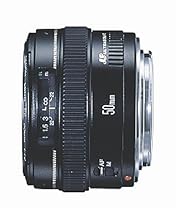
Canon EF 50mm f1.4 USM Standard & Medium Telephoto Lens for Canon SLR Cameras


Why spend more?5

With the 50mm f1.8 lens available for less than a hundred dollars why spend so much more to get the f1.4? The answer is you may not need to. It all depends on your seriousness budget and how long you need your lens to last.


If you want a "starter lens" for shooting at 50mm (or with prime lenses in general) the f1.8 would be a great buy. 50mm is a very useful and intuitive focal length to spend some time with because it sees the world at the same distance as your naked eye (regardless of your camera's crop factor). So you could buy the f1.8 cheaply regard it as a "play with it" lens and get a nice introduction to "prime lens quality." The f1.8 will seem like a substantial step up from kit lenses and most consumer-priced zooms and amazing bang for few bucks.


So if the f1.8 is such a great bargain why would the f1.4 be among Canon's most all-time popular lenses? It's that the f1.8 can take the great shot within certain conditions but the f1.4 delivers within a much wider range of conditions. In other words "You get what you pay for" and we'll save the best for last.


Affordable-but-Solid Contruction: The f1.4 will likely have a much longer life than the cheaper plastic build of the f1.8 and retain more resale value. It's an investment rather than a commodity. And it'll be more certain on your camera and in your hand. (My first one finally needed some calibration after 80000 shots and extreme wear-and-tear from frequent swapping with my other primes.) Users sometimes report the front glass falling out of their f1.8s. For the f1.4 the main issues revolve around the Micro USM focus motor which is not as sturdy as true USM.


Focus Versatility: The f1.4 lets your camera autofocus and then lets you tweak further by hand without flipping a switch - that's called "Full-Time Manual Focus." The f1.8 requires switching back and forth between auto and manual focus. The f1.8 is famously noisy/buzzy during autofocus has a bare-minimum focus ring and no distance scale. The f1.4 will autofocus more reliably especially in dim light though it will fail occasionally when starved.


Resistance to Abberation: Chromatic abberation (fringe colors) and barrel distortion are evident-but-low for both lenses at wide apertures - that's "prime lens quality." But in comparison tests the f1.8 is more susceptible to vignetting (shadows around the corners) halation (glowing around the highlights) and lens flare. For instance lens flare within the f1.4 tends to be more tightly controlled - "in focus" - whereas a bright light source is more like to blow out the whole shot in the f1.8. All these factors improve when stopped down but lag about a stop behind the f1.4.


Color: However if the f1.8 catches up at f/8 to the f1.4 by many standards it rarely catches up to the f1.4's saturation. The f1.4 has "proper-to-strong" color richness at all but the widest apertures while the f1.8's shots are much more likely to require postwork. (I do however get better saturation from my 24mm f2.8 and 100mm Macro f2.8. The 50 f1.4's saturation seems good-not-great by comparison.)


"Headroom": The engineering of both lenses lets you choose the tradeoff between "most possible light" or "most possible clarity." It's by design that you can choose "more light for less crisp" or stop down for sharpness. *Samples vary* but the average 50mm f1.4 should consistently "get down to sharp" more quickly "sharp enough" by f/2.0 "very very sharp" by f/2.8 (often exceeding the professional 24-70mm f2.8 L when wide open) and delivering "unreal sharp" by f/4. (I saw insane "specks of mascara sharpness" at f/3.5 from my first f1.4.) Again the f1.8 will probably lag about a stop behind that curve.


My second 50mm f1.4 performed even better than my first right out of the box "marginally sharp" at f/1.4 and increasingly beyond reproach by f/1.8-2. (At f/1.4-1.6 it suffers only from halation and some light fall-off in darker areas.) So if extreme sharpness is necessary for you shop with a strategy that will let you return your lens or get it calibrated if not up to your needs. My guess is that my first one was more typical out of the box but it approached the performance of the second after calibration.


(It's also worth noting that the premium-priced 50mm f1.2L is drastically more sharp (and better performing generally) at wide apertures but *less* sharp at f/2.8 through f/8. The f1.4 is a better "walkaround" performer than the f1.2L lens that costs four times as much.)


Regarding light return specifically my own experience in lens-swapping baffled me until I read other reports that the f1.4 exposes a third of a stop brighter than most other Canon lenses. It's brighter in the viewfinder generally and really IS a whole stop "faster" than the f1.8 at maximum apertures (i.e. the same net exposure at half the shutter speed). If you're willing to sacrifice some clarity that extra stop can make a huge difference when you're challenged by moving targets in low light.


(For instance shooting "wide open" for performers in dim venues. Faster shutter for less motion blur. More light for better color. And the edges may be soft at 100% magnification but *relatively* clear compared to the out-of-focus background. That "illusion of clarity" isn't as likely to print very well but resizes very snappily for the web.)


So the f1.8 can certainly produce some stunning images particularly in general daylight photography OR tightly-controlled conditions OR stopped down but is less adaptable to challenging circumstances that the f1.4.


"The Best for Last...":


Now with both these lenses you get the advantage of marvelously wide aperture which can be used for a tight focal plane that lets the background (or foreground distractions) fall quickly out of focus. This is of course a cornerstone of creative photography and both lenses give you plenty to explore. (In practice even f/2.8 delivers a pretty shallow depth of field in close-up shots so these wider lenses give you even more room to play.)


However there is such a thing as "blur quality" called "bokeh" based on the number of aperture blades within the lens. The f1.8 has five and the f1.4 has eight. The f1.8 will portray out-of-focus lights more pentagonally the f1.4 more roundly. (In focus those same lights will be eight-pointed stars with the f1.4 ten-pointed with the f1.8 - odd numbers of blades double the number of points.) But most importantly the blur from the f1.8 can be rather "choppy" especially at wide apertures while the f1.4's is consistently more "buttery smooth."


In other words there's more to quality than sharpness - there's also quality where your shot is LESS than sharp. And this is where the f1.4 becomes "a favorite lens" for some people even at over three times the price of its diminuitive counterpart.


Make no mistake the f1.8 would make an excellent "starter" lens. But the f1.4 is an exceptionally *serious* lens. Are you still learning to love photography? Then $80 is a fine price to pay for a lens you might outgrow. Or do you already love photography? Then $300 is a worthy price for a true investment that will reliably pay off. So they're both bargains just buy what's best for you.


(Addendum - Canon also sells a 50mm f2.5 Macro lens around $250. If you NEED macro it's reportedly pretty good and for general purpose as well. But it's a) not even as fast as the f1.8 b) more difficult to manually focus than the f1.4 and c) not as creamy in the bokeh with six aperture blades instead of eight. And Canon's 100mm version is drastically more practical for macro work and better performing generally. But the 50mm Macro does become a contender at a "middle price" if what you really need is one decent lens to do as many different things as possible though none of them as well.)More detail ...

Thursday, 23 September 2010

Nikon 35mm f/1.8G AF-S DX Lens for Nikon Digital SLR Cameras


Great for low light great focal length for DX and autofocus will also work with D40 D40x D60 and D5000 cameras5

This Nikon 35mm f/1.8G AF-S DX lens produces sharp pictures and great color and contrast. It is also perfect for portrait and other general purposes (semi-macro etc). This lens also produces nice bokeh. The picture quality and bokeh quality are comparable with the other Nikon prime lenses (50mm f/1.8 50mm f/1.4 50mm f/1.4 AF-S etc) lens which are famous for being sharp. Overall this is a very versatile lens. On a non full frame DSLR (such as D40 D40x D60 D5000 D80 D90 D200 D300 etc) this 35mm focal length is equivalent to about 50mm which is considered a normal lens (normal as to being close to a person eye viewing angle perspective).


Many of us including those who already own the 50mm prime have been waiting for this lens (prime lens that has wider angle than the 50mm) for a long time especially for non full frame DSLR owners that usually have about 1.5x magnification due to the smaller sensor size. Those 50mm lens on a non full frame DSLR is equivalent to 75mm which is often too much zoom for many situation. For example in a room where you can't keep backing up to compose your photos or when taking picture of a group of people where you will need to move back a lot with the 50mm lens. This 35mm lens will solve that problem to some extent as this is a lot wider lens than the 50mm prime lenses. Having said that the 50mm prime lens is still a great lens. If you don't own any of the earlier version of the 50mm lens and wondering if you should get this 35mm or the 50mm then I would recommend you to get this lens over 50mm unless you know for sure that you need more zoom than the 35mm for your purpose then you can go and buy the 50mm or 85mm (both available on f/1.4 or f/1.8).


This lens (DX lens) is not designed for a full frame camera (FX or Film). There will be light fall-off which is quite significant. If you have a full frame DSLR you might want to get the 50mm f/1.4 AF-S or the older 35mm f/2 AF-D lens instead.


Being a prime lens (this 35mm lens) you will need to move your feet a lot to compose your picture.


While this lens produces very sharp images at f/1.8 the corner show lower contrast. Sharpness and contrast increases further as you stop down to f/2 f/2.8 and f/4. Sharpness increases slowly after f/2.8 (i.e. at f/2.8 seems to be the optimal without sacrificing too much speed)


The big plus with this lens over the older 35mm lens is the AF-S feature which is auto focus system that is internal to the lens very fast and very silent. This lens will please a lot of people who currently own D40 D40x D60 and D5000 as they now can benefit from the autofocus.


Another big win is the manual override on autofocus mode (M/A mode) which will allow us to change the focus without having to change the mode to manual mode (this is pretty standard to most Nikon newer lenses but it's quite new for Nikon prime lens series)


This lens doens't have image stabilization (VR) but that is kind of expected as Nikon also doesn't include VR on their new 50mm f/1.4 AF-S lens. It would be nice to have VR (for longer exposure handheld operation and for people with less stable photography technique) but it will probably increase the size weight and cost of this lens.


If you are wondering whether you should get a fast lens or a lens with VR (Vibration Reduction) here's my take: In overall VR does help a lot (as it will reduce camera shake) and will produce better/sharper picture than equivalent lens without VR (especially if the object is static). If the object is moving fast (sports/action) then VR feature alone might not help (depending on how fast the object is moving and how much light is available) and a fast lens often end up being a far better solution even without VR feature as it will allow much faster shutter speed to freeze motion. Using tripod (and a remote) will substitute for the need of VR feature. In general I would recommend getting a fast lens with VR feature (and usually it is expensive) such as the 70-200 f/2.8 VR but if one can only get for one or the other then find out what do you want to use the lens for and then use the guideline mentioned here.


If you are wondering whether you will get the benefit of buying f/1.4 lens over a f/1.8 lens just remember that the f/1.4 lens is about 60% faster than f/1.8 at its widest aperture setting. With this information you can decide if the additional speed will justify the additional cost. The bokeh is nicer as well in f/1.4 lens but I think speed is usually the main factor in deciding whether to get the more expensive f/1.4 lens.


Here are the summary of pros and cons for this Nikon 35mm f/1.8G AF-S lens:


Pros:

1. AF-S AF-S AF-S (very fast focus internal focus and very silent)

2. M/A mode (manual focus override available on autofocus mode)

3. Very fast lens (f/1.8)

4. Very sharp pictures

5. Great for sport/action photography (though you might need more zoom)

6. Great for indoor and low light situation

7. Great for portrait

8. Bokeh is almost as good as many expensive Nikon tele-lens

9. Perfect for low light with no-flash event. However also check out the following lens for low light photography: 17-35mm f/2.8 24-70 f/2.8 17-55mm f/2.8 28-70mm f/2.8 or the the 50mm nikon prime lenses.

9. Great focal length (35mm). About 50mm equivalent which is a normal lens (If you need more zoom you can get the Nikon 50mm or 85mm prime lens or 70-200mm f/2.8 VR lens).

10. Did I already mention very fast and very silent focus? :)


Cons:

1. Being prime lens you need to move your feet a lot to adjust/compose

2. Being a G lens (no aperture ring available) this lens will not work on manual focus camera where you need to set the aperture from the lens)

3. No VR. As VR will be useful for taking handheld shots on low light (especially if the object is somewhat static or if the photographer doesn't have steady hands when taking photograph)

4. Not designed for full frame cameras (FX or Film) where there will be siginificant light fall-off.


Bottom line: This lens is so versatile that I think everyone should own this lens in addition to all the lenses that they already have (even if they alredy have the 50mm prime lens). Being a very fast lens it will allow people to take action shot in low light that otherwise wouldn't be able to be do. And now with AF-S there is nothing to dislike about this lens (though in my opinion this lens might attract even more interest if it has a VR feature).


Happy Photographing!


Sidarta TanuMore detail ...

Tuesday, 21 September 2010

Nikon 50mm f/1.8D AF Nikkor Lens for Nikon Digital SLR Cameras


One of the best lens for portrait and low light photography.5

I don't even know where to start. This lens produces sharp pictures and great color and contrast. And for its price (which seems to climb recently) it is worth more than 5 stars rating. I initially get this lens for low light action and sport photography (as this lens is famous for being one of the fastest lens together with its brother 50mm f/1.4) but I also found out that this lens is also perfect for portrait and other general purposes (macro etc). This is definitely a very versatile lens.


As much as I want to encourage everyone to buy this lens right away let me mention some of the limitation that you would see (which I think will be helpful to go over before deciding to buy this lens):


First being a prime lens you will need to move your feet a lot to compose your picture. If you are used to zoom lens don't underestimate this limitation. It takes me a while to get used to it and sometime I still find people looking at me wondering why I am moving forward and backwards. the good news is that most of the time they don't think I'm weird but they are actually wondering if I'm a professional photographer.


Secondly the focal range of 50mm which is considered the normal lens and great for portrait lens. but on many DSLRs which is not full frame (unless you have a full frame Nikon DSLR like the D700 or D3 then 50mm is 50mm) this lens become a 75mm equivalent which is in the border of a short tele lens. I actually like the 75mm equivalent though I often have to move backwards when taking picture of a group of people.


Third in some situation the autofocus might not able to focus (which is common for many other lens too). It is hard for the autofocus to lock when aiming at a wall that is one color (usually black or white) or on a clear sky (day or night). This kind of makes sense to me actually. IN these situations the AF assist light doesn't help either so you can opt for manual focus or set the focus to infinity when you can't find focus lock on scenic/landscape or sky photography. So far I don't have many problems with the autofocus.


Sharpness increases as you stop down to f/2.2 or f/2.5. I actually use f/1.8 most of the time and the results are still nice. Personally I'd rather use f/1.8 aperture settings than stopped down (e.g to f/2.8) and compensate with higher ISO setting which often gives me grainy picture. But if your object is not moving (static) then it is better to stop down to f/2.8 or more.


If you are wondering whether you should get a fast lens or a lens with VR (Vibration Reduction) here's my take: In overall VR does help a lot (as it will reduce camera shake) and will produce better/sharper picture than equivalent lens without VR (especially if the object is static). If the object is moving (sports/action) then VR feature alone might not help (depending on how fast the object is moving and how much light is available) and a fast lens often end up being a far better solution even without VR feature as it will allow much faster shutter speed to freeze motion. Using tripod (and a remote) will substitute for the need of VR feature. In general I would recommend getting a fast lens with VR feature (and usually it is expensive) such as the 70-200 f/2.8 VR but if one can only get for one or the other then find out what do you want to use the lens for and then use the guideline mentioned here.


If you are wondering whether you will get the benefit of buying f/1.4 lens over a f/1.8 lens just remember that the f/1.4 lens is about 60% faster than f/1.8 at its widest aperture setting. With this information you can decide if the additional speed will justify the additional cost. The bokeh is nicer as well in f/1.4 lens but I think speed is usually the main factor in deciding whether to get the more expensive f/1.4 lens.


Here are the summary of pros and cons for this Nikon 50mm f/1.8D AF lens:


Pros:

1. Very fast (f/1.8)

2. Very sharp pictures (especially when stopped down to f/2.2 f/2.5 or more.)

3. Great for sport/action photography

4. Great for indoor and low light situation

5. Great for portrait

6. Bokeh is almost as good as many expensive Nikon tele-lens

7. Fast autofocus

8. Good for wedding photography (or no-flash event). However if this is your main objective then you might want to get the 50mm f/1.4 version or 28-70mm f/2.8 lens)

9. 75mm equivalent which can be considered a short tele lens (I actually like the fact that it's 75mm equivalent vs 50mm in DSLR. if you need more zoom you can get the Nikon 85mm f/1.8 or the 70-200mm f/2.8 VR). If you have full frame DSLR(like the D3 or D700) then this #9 pros is not applicable.

10. Inexpensive


Cons:

1. Being prime lens you need to move your feet a lot to adjust/compose

2. Autofocus issue on some situations (read detail above)

3. Plasticy build

4. Autofocus is not the most silent but very reasonable

5. 75mm equivalent with 1.5x multiplier on non full frame DSLR (many people find this is an odd range for normal lens. I actually like it). If you have full frame DSLR(like the D3 or D700) then this #5 cons is not applicable.

6. Autofocus does not work with D40 D40x D60 and D5000. The newer 50mm f/1.4G AF-S lens or 35mm f/1.8G AF-S lens will autofocus with those cameras.


Bottom line: This lens is so versatile (and inexpensive) that I think everyone should own in addition to all the lenses that they already have. Being a very fast lens it enables me to take pictures in low light (sport/action photography) that I otherwise wouldn't be able to do.

After knowing its limitation I would predict that 99% of you that decides to buy this lens will find this lens very useful. And if you decide that you don't like it (which I think not more than 1%) I'm sure there will be a lot of people who wouldn't mind buying it from you (with some discount of course).


Again I would recommend everyone to get this lens. In some ways I can say that this lens makes me a better photographer.


Happy Photographing!


Sidarta TanuMore detail ...